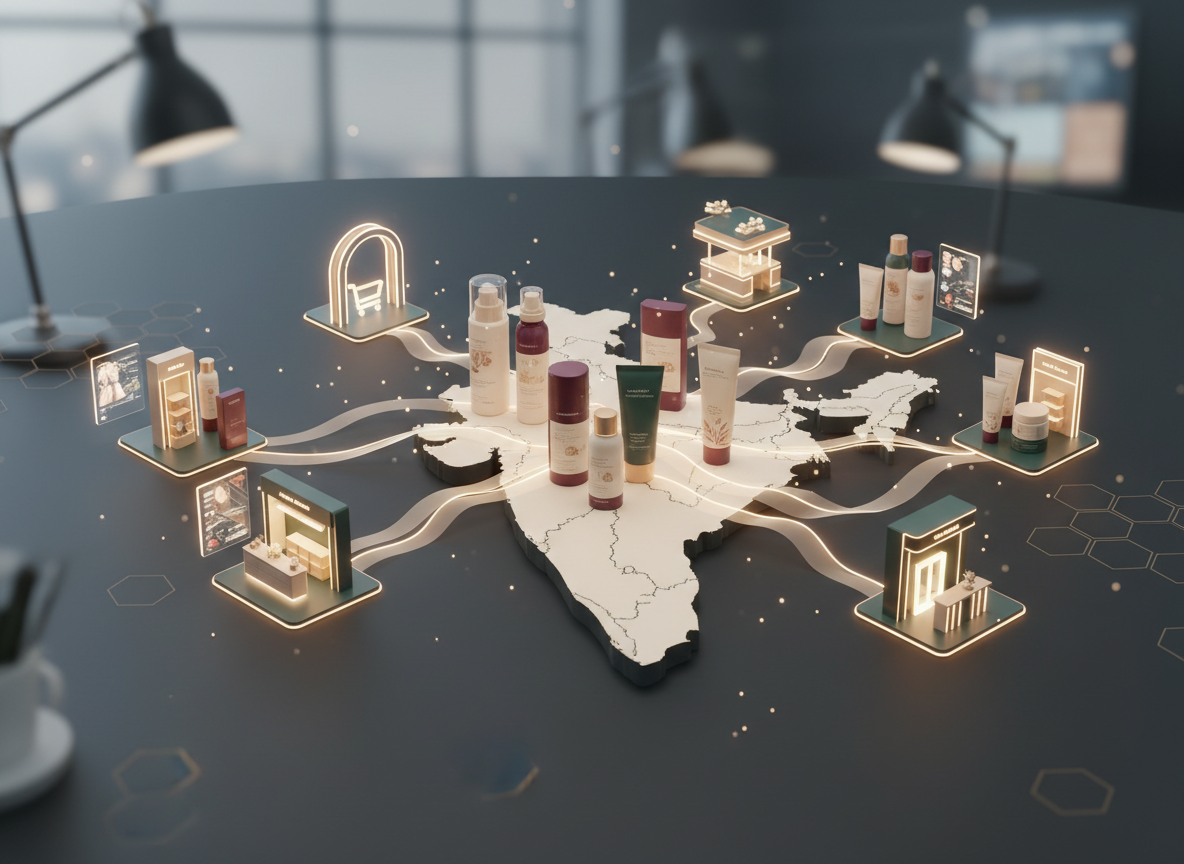
The phrase “D2C beauty brand” is becoming less precise in India. Many companies that began by acquiring customers through their own websites and social platforms now sell through marketplaces, specialist beauty retailers, quick commerce and physical stores. The category is better understood as digitally native beauty moving toward omnichannel scale.
This AdvertisR map is not a ranking of the best D2C beauty brands in India. It looks at the business models behind the category: founder-led brands, listed brand houses, retailer-owned portfolios, strategic acquisitions and emerging companies trying to turn digital demand into durable distribution.
From single brands to multi-brand houses
Honasa Consumer illustrates how a digitally native beauty company can evolve into a portfolio business. Its brand house includes Mamaearth and The Derma Co alongside other beauty and personal-care brands, while its corporate disclosures show continued investment in offline distribution and brand-building infrastructure.
The business logic is different from launching one hero brand. A multi-brand house can address different consumer propositions and price points while sharing capabilities such as distribution, technology, talent and marketplace operations. The challenge is ensuring each brand remains distinctive enough to earn repeat demand rather than becoming another label inside a portfolio.
Retailers are becoming brand owners
Nykaa represents another model. Its House of Nykaa portfolio includes Nykaa Cosmetics, Nykaa Naturals, Kay Beauty, Dot & Key, Wanderlust, Earth Rhythm and other owned propositions. The company’s FY2025 annual report said owned beauty-brand GMV grew 55% year on year and contributed 14.4% of beauty-business GMV.
The strategic advantage is distribution proximity. A retailer can see category demand, search behaviour and merchandising performance while also controlling customer touchpoints. But retailer ownership does not automatically guarantee brand success: owned brands still have to compete for attention, trust and repeat purchase.
D2C brands are moving offline
The broader category is increasingly omnichannel. Digital channels remain useful for launch velocity, education and first-party customer relationships, but physical retail can reduce trial risk for colour cosmetics, fragrances and premium skincare. Marketplaces add reach, while quick commerce can capture convenience and increasingly discovery.
This means the modern D2C beauty operating model is often multi-channel from relatively early in the brand lifecycle. The question is no longer whether a company is “D2C” or “offline”; it is which channels perform acquisition, discovery, trial, replenishment and profitable repeat purchase.
Strategic capital is changing the ownership map
India’s beauty brands are also moving through different ownership structures. Nykaa has progressively increased ownership in Earth Rhythm and completed a 51% acquisition of Aminu Wellness. L’Oréal has moved toward ownership of the Innovist brand house. Other emerging companies are taking minority strategic capital while founders retain control.
For founders, that creates more options than a conventional venture round or outright sale. Capital can arrive through minority investment, majority acquisition, progressive stake-building or full strategic integration. Each model changes governance, distribution access and the founder’s long-term role differently.
What should investors and operators measure?
AdvertisR would compare D2C beauty businesses across six dimensions: repeat purchase, gross margin after discounts, customer-acquisition efficiency, marketplace dependence, offline productivity and category concentration. Revenue growth without those operating measures can hide whether a brand is building durable demand or simply buying transactions.
Distribution also deserves more attention than follower counts. A brand with strong social visibility but weak availability can lose demand at the point of purchase. Conversely, expanding too quickly into channels without adequate inventory, merchandising or working capital can destroy economics.
The next phase of D2C beauty in India
The next phase is likely to produce fewer purely direct-to-consumer businesses and more digitally born omnichannel beauty companies. Creator-led discovery, specialist retail, quick commerce, marketplaces and strategic ownership are all becoming parts of the same operating system.
AdvertisR’s view: “D2C” remains useful as an origin story, but it is becoming a weak description of mature Indian beauty companies. The brands that matter most will be those that convert digital attention into repeat demand and then build distribution without losing unit economics or brand distinctiveness.
Explore the wider AdvertisR brand map: See Beauty Brands in India 2026 for the full ownership and category landscape, Emerging Beauty Brands in India 2026 for younger challengers, and the India Beauty Channel Map 2026 for how D2C, marketplaces, quick commerce and stores now work together.
Method note: this is an editorial business map rather than a comprehensive ranking. Ownership and operating examples are based on company disclosures and AdvertisR’s existing beauty capital and brand tracking.