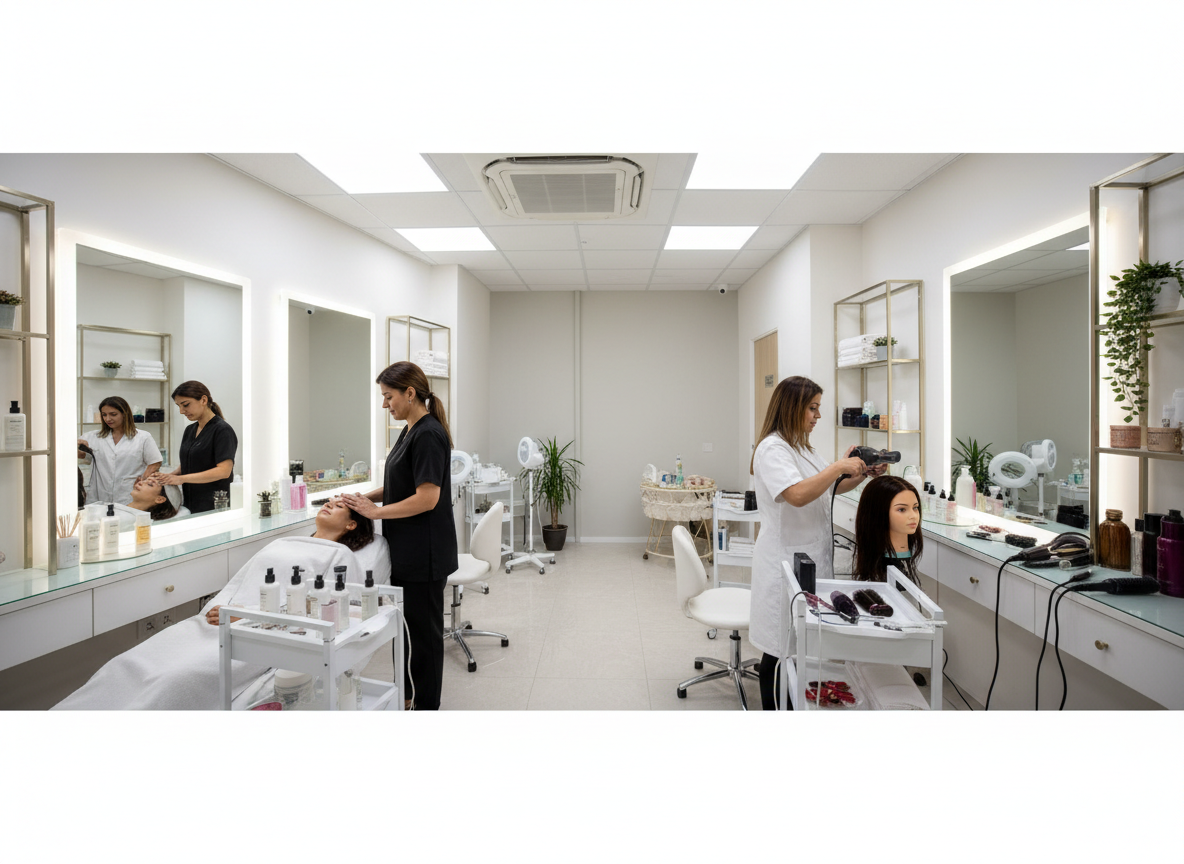
Updated October 2026. A beauty parlour course can cover far more than makeup. Depending on the programme, students may learn skincare, hair services, grooming, makeup, nails, hygiene and the basics of working with salon clients.
But course names are inconsistent across India. “Basic beauty course”, “beautician course”, “beauty parlour course” and “advanced beauty course” can describe very different curricula. This guide focuses on what students should compare before paying.
Which guide should you read? This page is for students comparing the structure and practical value of a beauty parlour training programme, including equipment, hands-on hours and certificate questions. If your main goal is to compare specific beautician career pathways and broad training qualifications, read our beautician course guide. The two guides address related searches but different decisions.
Beauty parlour course: quick overview
| Common formats | Basic, certificate, advanced, diploma-style and specialised programmes |
| Duration | From short introductory programmes to several months or longer, depending on scope |
| Typical modules | Skin, hair, makeup, grooming, hygiene, client service and sometimes nails |
| Eligibility | Varies by institute and qualification |
| Career routes | Salon employment, freelance services, bridal work, beauty retail and entrepreneurship |
How much are beauty parlour course fees in India?
There is no reliable single national fee because a short basic programme and a comprehensive professional programme are not comparable products. Pricing varies with city, duration, academy reputation, trainer access, practical hours, products, equipment and certification.
Before comparing two institutes, request the complete payable cost. Ask whether registration, examination, certificate, student kit, consumables, uniforms, models and portfolio work are included. A lower headline fee can become more expensive once compulsory extras are added.
What should a beauty parlour course syllabus include?
- Personal and salon hygiene
- Sanitation and tool safety
- Skin basics and consultation
- Cleansing and facial-service fundamentals
- Hair and scalp basics
- Hair styling and common salon services, depending on course level
- Basic makeup and colour knowledge
- Threading, waxing or grooming services where included
- Manicure and pedicure fundamentals where included
- Client consultation and service etiquette
- Product knowledge
- Basic salon operations, pricing and customer handling in career-focused programmes
The exact syllabus matters more than the course name. Students should ask which services they will perform themselves, how often they will practise and what is demonstration-only.
Basic vs advanced beauty parlour course
| Programme | Typical purpose | What to verify |
|---|---|---|
| Basic beauty course | Foundation skills and introduction to salon services | Practical hours and service coverage |
| Certificate course | Structured entry-level vocational training | Who issues the certificate and assessment method |
| Advanced course | Broader or more specialised service capability | What is genuinely additional to the basic curriculum |
| Diploma-style programme | More comprehensive career preparation | Duration, depth, recognition and practical exposure |
| Specialisation | Makeup, hair, nails, skin or another focused skill | Required prior knowledge and commercial relevance |
How long does a beauty parlour course take?
Duration depends on the number of skills being taught and the intensity of training. Calendar length by itself does not establish quality. A useful comparison should include total classroom hours, supervised practical hours, model practice and assessments.
If an institute advertises a three- or six-month course, ask how many days per week students attend and how many hours are actually taught. Two courses with the same advertised duration can provide very different training exposure.
Beauty parlour course after 10th or 12th
Many private vocational beauty programmes accept learners after school, but eligibility varies by institute and qualification. Students should verify age, educational requirements and any examination or certification rules directly with the provider.
For younger students, course selection should also consider the intended career path. Someone planning salon employment may need a broader service foundation, while someone focused specifically on bridal makeup may eventually benefit from specialist artistry training.
What about government or free beauty parlour courses?
Government-supported and subsidised skill programmes can exist through different schemes, training partners and local centres, but availability, eligibility, fees and course names change. Do not rely on an old advertisement or a third-party listing. Verify the current programme, training partner, qualification and any charges through the relevant official skill-development or government channel before enrolling.
Does the course include a kit?
Some institutes bundle a student kit; others require separate purchases. Ask for a written list showing tools, products, quantities and whether the items remain yours after training. Also ask how much students typically spend on consumables during practical sessions.
What does the certificate tell an employer?
A certificate can document course completion, but employers and clients may still evaluate practical skill, hygiene, speed, consultation ability and consistency. Ask who issues the certificate, whether students are assessed and whether the qualification maps to any recognised vocational framework.
Career options after a beauty parlour course
- Salon professional: work under an established salon or beauty studio.
- Freelance beautician: provide selected services independently or at clients’ locations.
- Makeup and bridal services: usually requires deeper makeup practice and a strong portfolio.
- Beauty retail: customer consultation, demonstrations and product-led roles.
- Specialist services: develop deeper capability in hair, skin, nails or makeup.
- Salon entrepreneurship: build toward operating a studio or salon after gaining technical and operating experience.
Beauty parlour course vs makeup artist course
A beauty parlour course is generally broader and can cover multiple salon services. A professional makeup course focuses more deeply on cosmetic artistry, complexion, eyes, bridal or occasion looks and portfolio development. Students focused specifically on makeup should read our Makeup Artist Course in India 2026 guide.
Beauty parlour course vs beautician course
In everyday Indian search and advertising, the terms often overlap. The meaningful difference is not the label but the curriculum. Compare the modules, depth, practical exposure and assessment. Our broader Beautician Course in India 2026 guide explains the career and curriculum framework in more detail.
Checklist before paying course fees
- Request the complete syllabus.
- Confirm total fees, not only tuition.
- Ask for classroom and practical hours.
- Check batch size.
- Find out who teaches your batch.
- Ask how practice models are arranged.
- Get the kit and consumables policy in writing.
- Understand the certificate and assessment.
- Verify placement claims rather than assuming placement is guaranteed.
- Read attendance, refund and rescheduling terms.
The AdvertisR view
Beauty education should be judged by whether it produces safe, repeatable, commercially usable skills. Students should prioritise supervised practice, trainer quality and breadth of real service exposure over glamorous academy marketing.
The wider employment and skills context is mapped in AdvertisR’s India Professional Beauty Workforce & Skills Map 2026 and our guide to comparing makeup academies in India.
AdvertisR is an independent beauty-business publication. Course fees, duration, curriculum, eligibility and certification vary by provider and can change. Verify current information directly with the institute or relevant official authority before enrolling.