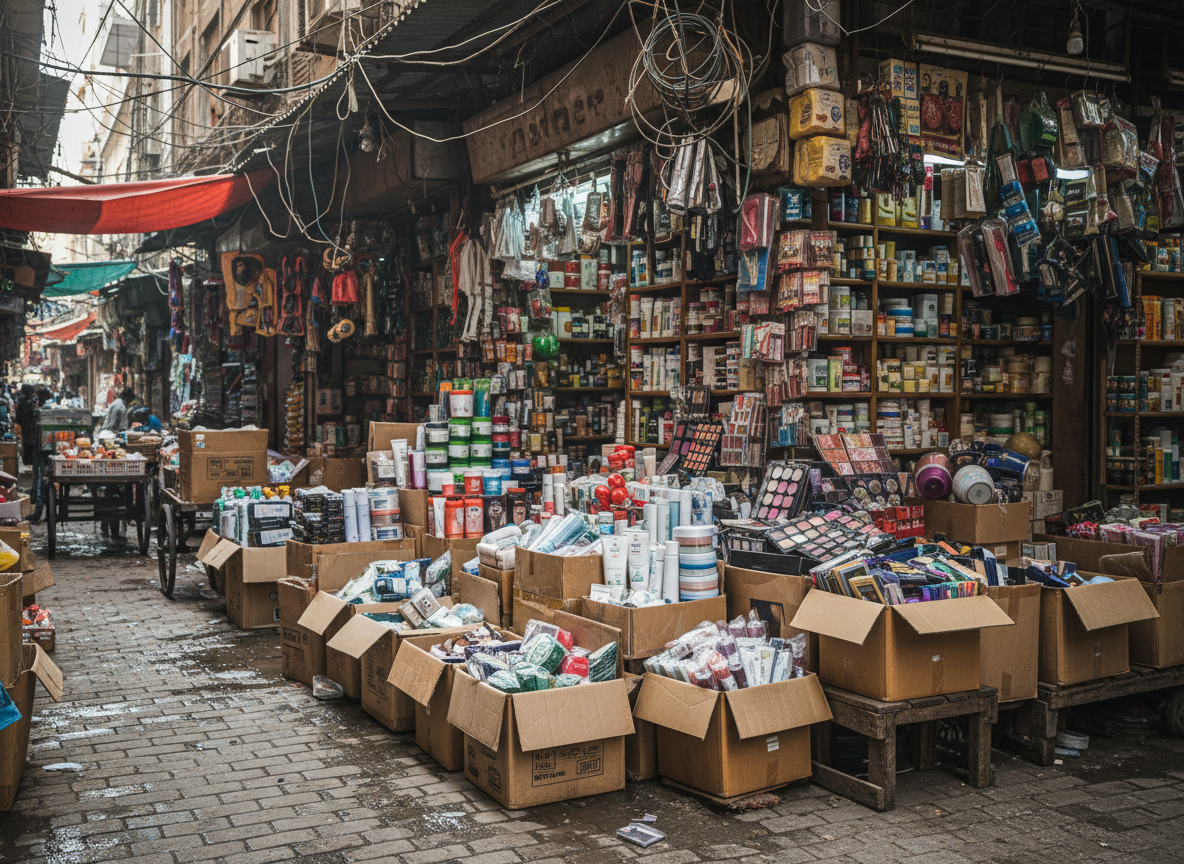
Updated September 2026. Delhi remains one of North India’s most important wholesale sourcing centres, and cosmetics are a visible part of that ecosystem. For salon owners, resellers, small beauty brands and marketplace sellers, the phrase “cosmetic wholesale market in Delhi” usually leads toward Sadar Bazaar and the surrounding Old Delhi trading network.
The opportunity is obvious: dense supplier choice, low entry quantities in some shops and access to beauty products, accessories and packaging in one geography. The risk is equally important: authenticity, batch traceability, labelling, invoices and regulatory compliance can vary widely. For a business buyer, the cheapest unit price is not necessarily the lowest-cost purchase.
Where is the main cosmetic wholesale market in Delhi?
Sadar Bazaar is the strongest starting point for a B2B cosmetic-sourcing trip. The Government of NCT of Delhi’s Department of Trade and Taxes lists numerous Sadar Bazaar sub-markets and streets in its official market directory, confirming the area’s dense wholesale structure.
Secondary wholesale directories and market guides also consistently identify Sadar Bazaar as a major cosmetics and beauty-products sourcing zone, with Karol Bagh and parts of Chandni Chowk serving adjacent wholesale and semi-wholesale demand.
For AdvertisR, the useful distinction is not which market is ‘cheapest’. It is which sourcing route is appropriate for your business model.
Who should source from Delhi wholesale markets?
- Independent cosmetic retailers testing new price points or categories.
- Salon owners sourcing accessories, disposable products or selected retail lines.
- Marketplace and social-commerce resellers looking for low-MOQ inventory.
- Small beauty brands researching packaging, merchandising and category price architecture.
- Regional distributors benchmarking trade margins and availability.
Brands looking for contract manufacturing, proprietary formulation or authorised national distribution should generally treat a wholesale market as a research and sourcing layer, not as a substitute for formal manufacturer or distributor due diligence.
The five checks to make before buying cosmetics wholesale
1. Ask for a proper GST invoice
A GST invoice helps establish the legal seller, product description and transaction trail. It is especially important for retailers and businesses that need input-tax documentation or may later need to trace a problematic batch.
2. Check manufacturer, importer and batch details
For packaged cosmetics, inspect the manufacturer or importer name, batch or lot number, date information, MRP and mandatory declarations. Packaging that looks similar to a recognised brand is not proof of authenticity.
3. Verify whether the supplier is authorised
If you are buying branded stock, ask whether the seller is an authorised distributor or sub-distributor and request supporting documentation where appropriate. Large discounts can be legitimate, but they can also reflect old stock, grey-market sourcing or counterfeit risk.
4. Inspect expiry and storage conditions
Heat, sunlight and poor storage can damage colour cosmetics, fragrances and skincare even before the printed expiry date. Check cartons, seals, leakage, odour and batch consistency before placing large orders.
5. Separate sampling from scaling
A low-MOQ test purchase is useful for checking sell-through and product quality. It should not automatically become a large repeat order until the supplier, documentation and customer response are proven.
Why compliance matters more in beauty than many resellers expect
Cosmetics are not simply fashion accessories. Product safety, labelling and authorisation matter. In September 2026, India’s drug regulator warned consumers against two unauthorised beauty creams after testing found heavy metals above specified limits. That is a reminder that sourcing risk can become a regulatory and reputational problem for retailers as well as manufacturers.
Read AdvertisR’s CDSCO cosmetics warning analysis and our guide to the 2026 cosmetics packaging origin-dot requirement.
Sadar Bazaar vs authorised distribution: which is better?
| Buying route | Best suited for | Main advantage | Main risk |
|---|---|---|---|
| Wholesale market | Resellers, small retailers, testing demand | Variety and negotiation flexibility | Authenticity and documentation can vary by seller |
| Authorised distributor | Established retailers and salons | Traceability, brand support, reliable replenishment | Higher MOQs or less flexible pricing |
| Manufacturer / contract manufacturer | Own-label beauty brands | Control over formulation, packaging and scale | Higher development effort and working capital |
| B2B marketplace | Repeat ordering and geographic convenience | Digital catalogue and delivery | Supplier verification still required |
How to plan a productive sourcing visit
- Prepare a category list and target landed cost before visiting.
- Collect quotations from at least three suppliers for the same or comparable SKU.
- Photograph labels, batch information and carton quantities before committing.
- Ask for MOQ, replacement policy, payment terms and delivery terms in writing.
- Do not rely on verbal claims about ‘original’, ‘imported’ or ‘same factory’.
- Keep a supplier scorecard covering price, documentation, authenticity, communication and repeat availability.
For brands and resellers thinking beyond wholesale buying, AdvertisR’s India beauty channel map explains how D2C, marketplaces, quick commerce and stores now work together.
AdvertisR takeaway
Delhi’s wholesale cosmetics ecosystem can be valuable for price discovery, supplier discovery and small-batch sourcing. But businesses should optimise for traceability and repeatability, not only unit cost.
The right supplier is the one that can repeatedly deliver compliant, genuine, documented stock at a margin that survives returns, damaged inventory, marketplace fees and customer complaints.
Sources
Market-location context: Department of Trade and Taxes, Government of NCT of Delhi market directory. Additional wholesale-market context: Lotwaala Delhi cosmetics wholesale directory. Regulatory context: CDSCO public notice.